My Restaurant Franchise
Strategy and Structure
Program
Restaurant Business Growth Requires Strategy and Structure
You are ready to grow. The question is how to structure that growth so it produces the results you want, while keeping in mind expansion decisions affect future optionality, valuation, leadership continuity, capital access, and long-term enterprise direction.
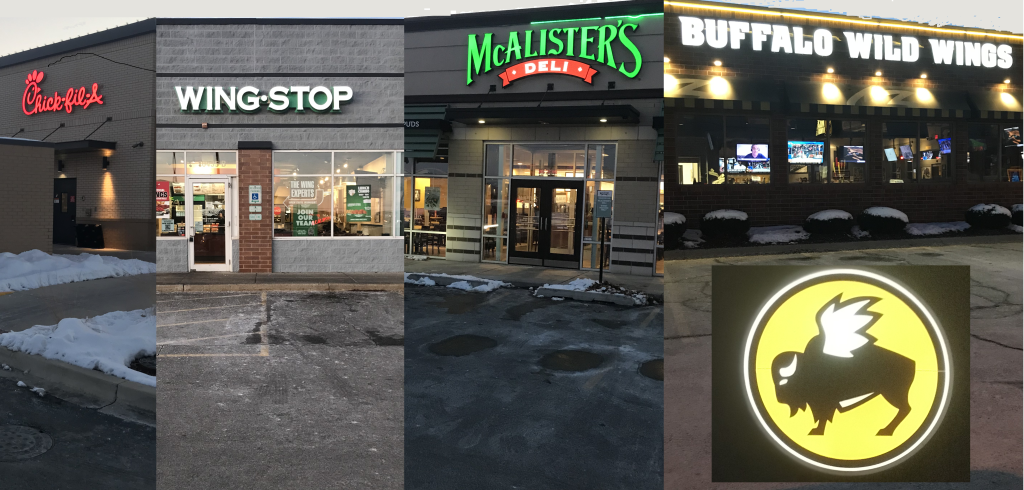
Understand the Process First
Most restaurant owners try to grow first, and structure later. That is why expansion breaks.
The video explains how restaurant growth strategy and structure influence scalability, governance, and long-term expansion.
Recommended before continuing below.
What Coherent Structure Makes Possible
Three family groups owned Max’s Restaurant, a Philippine based fried chicken chain, and operated restaurants in the Philippines and California.
Working through the restaurant growth strategy and structure process made something important clear.
The issue was not growth. The issue was coherence.
We now have 84 company-owned and 109 franchised locations across multiple countries.
The value of our brand has multiplied many times over because of this.
We have acquired more brands and have gone public under our new name Max’s Group, Inc.
_____________
William E. Rodgers
Director
Max’s Group, Inc.
Growth Requires More Than Expansion
Restaurant business growth is not simply about adding units, increasing sales, or franchising a concept.
Sustainable growth requires alignment between:
- operations,
- economics,
- governance,
- leadership,
- brand standards,
- scalability,
- and long-term strategic direction.
Most restaurants businesses already possess some of the ingredients necessary for growth.
The problem is often that the underlying structure was never intentionally designed to support expansion.
My Restaurant Franchise Strategy and Structure is designed to help clarify and align those elements before growth magnifies existing weaknesses.
Most restaurant business owners think they have a growth problem.
They don’t.
What feels like growth pressure is usually something else.
Expectations begin conflicting.
Expansion opportunities stop fitting together naturally.
Important decisions become increasingly reactive.
That is not a growth issue. It is a structure issue.
Structure restores:
- alignment,
- focus,
- operational consistency,
- and intentional decision-making.
Instead of reacting to growth pressure, the business begins operating from a clearer framework:
- priorities become easier to evaluate,
- systems begin reinforcing each other,
- and growth becomes more deliberate.
That is usually the point where expansion stops feeling chaotic and starts becoming scalable.
Structure determines what growth becomes.
With structure, growth creates freedom.
Without it, growth creates obligation.
Structure multiplies what already exists.
Growth becomes scalable only when the structure supporting it becomes coherent.
In the Max’s Chicken example above, the business was already successful.
The breakthrough was not simply deciding to grow.
It was creating a structure that unified ownership, strengthened control, and allowed company-owned and franchised locations to coexist.
That is what made growth coherent.
This is why I do not start with franchising documents, growth tactics, or expansion promises.
Most hesitation is not really about franchising.
It is about:
- control,
- relationships,
- expectations,
- economics,
- leadership,
- operational consistency,
- and long-term consequences.
The same structural patterns kept appearing:
- ownership conflicts,
- operational pressure,
- inconsistent expectations,
- reactive decision-making,
- and growth relationships that no longer fit the business.
The real objective is not franchising itself.
It is creating relationships that:
- align incentives,
- preserve operational consistency,
- support long-term objectives,
- and remain structurally coherent as the business grows.
Sometimes that structure ultimately requires franchise compliance.
Sometimes it does not.
The legal structure matters, but it is not the starting point.
The strategy comes first.
Then the relationship structure.
Then the legal framework that supports it.
This is why expansion breaks.
Decisions get made under pressure.
Exceptions become policy.
Teams interpret things differently.
Control becomes unclear.
Nothing breaks immediately. Options narrow quietly.
A restaurant company once came close to abandoning franchising after its first franchisees struggled badly.
The founder had strong restaurant systems in place, but the problem was not the restaurant operation itself. The problem was there was no real system for onboarding franchisees into the culture, standards, expectations, and operating discipline of the business.
It reminded me of training recruits as a boot camp instructor in the Norwegian navy.
We brought the franchisees back to what we called “boot camp” and rebuilt the onboarding process around structure, repetition, accountability, and operational consistency.
The business later became an exceptional franchising success story.
Structure preserves options before growth narrows them.
Owners often assume they can decide later:
- later to franchise,
- later to raise capital,
- later to bring in partners,
- later to step back,
- later to sell.
But systems, relationships, incentives, and expectations continue to form in the meantime.
The structure is developing either way. The only question is whether it is intentional.
One of the biggest misconceptions in growth is that optionality remains constant.
It does not.
Every major decision:
- ownership arrangements,
- vendor dependencies,
- territory assumptions,
- compensation structures,
- operating practices,
- and leadership habits,
either expands or narrows future choices.
That is why structure matters most while the business is still flexible enough to shape.
Unstructured growth often destroys enterprise value before sales or profits decline.
Many businesses continue expanding while becoming:
- harder to manage,
- harder to finance,
- harder to transfer,
- and harder to scale coherently.
Growth pressure creates:
- reactive decisions,
- operational inconsistency,
- increasing overhead,
- fragmented leadership,
- and channels of distribution that no longer align with the long-term structure of the business.
In many cases, enterprise value begins deteriorating long before revenue and cash flow visibly suffer.
Structured channels of distribution multiply value differently.
A properly structured channel of distribution does more than increase sales.
It can:
- strengthen brand equity,
- improve operational consistency,
- preempt competition,
- preserve optionality,
- reduce organizational friction,
- and increase the long-term transferability of the business.
That is why well-structured distribution systems often increase enterprise value even before full implementation.
The structure itself changes the strategic position of the business.
It may not be obvious where you should start.
Some restaurant businesses are ready for a complete Restaurant Growth Strategy and Structure process immediately.
Others first need:
- stronger unit economics,
- prototype refinement,
- leadership alignment,
- operational clarification,
- or a lower-risk first step before major expansion decisions are made.
The best starting point is usually the one that match:
- the current realities of the business,
- and the current mindset of the ownership group.
That is how growth becomes sustainable instead of forced.
The important thing is to begin moving intentionally.
There is no single “correct” place to start.
The objective is always the same: a professionally structured growth program aligned with the full Restaurant Business Growth Strategy and Structure framework.
The starting point simply depends on what the business currently needs most.
Before anything begins, we’ll have a conversation covering:
- the business,
- the objectives,
- the risks,
- and the most coherent path forward.
And as the business evolves, it is always possible to move into other stages, programs, or strategic paths later.
The structure should adapt to the business, not force the business into the wrong sequence.
At that point, the question is not whether to grow.
It is how to do it deliberately.
Are you ready for structured expansion?
You already have:
- a profitable or promising prototype,
- operational consistency,
- and a desire to grow intentionally.
At this stage, the most important question is usually not whether expansion is possible, but whether the structure you design is strong enough to support the outcome you actually want.
You Are Nearly Ready, But Still Need More Clarity?
You already have:
- a promising prototype,
- interest in expansion,
- and the sense that growth may be possible.
But you may still have questions about:
- profitability,
- brand positioning,
- prototype refinement,
- economics,
- scalability,
- or the long-term implications of different growth models.
This is often the right stage to clarify assumptions before making larger expansion commitments.
→ Explore Our Growth Models, Profitability, Brand, and Prototype Refinement Resources
If Your Prototype Needs More Than Minor Refinement Before Expansion
You may already see the potential for expansion, but still feel that:
- profitability,
- operational consistency,
- positioning,
- culture,
- or scalability
need stronger alignment before growth accelerates.
In these situations, expansion is often possible later, but the prototype usually needs an intervention first.
→ Learn more about the Prototype Turnaround or Refinement Program
If Your Expansion Has Slowed, Stalled, Or Become Harder To Control
You may already have:
- multiple locations,
- franchisees,
- operating systems,
- or expansion momentum,
but still feel that:
- control has become less clear,
- standards are harder to maintain,
- growth is becoming reactive,
- or the structure no longer supports the business the way it once did.
In these situations, the objective is often not faster expansion first, but restoring clarity, alignment, and structural coherence.
If You Prefer A More Self-Directed Approach
You may prefer to:
- learn independently,
- move at your own pace,
- retain maximum direct involvement,
- or seek targeted guidance only where needed.
That approach can work well when::
- expansion timing is flexible,
- the business is still evolving,
- or you want to deepen your understanding before committing to a larger engagement.
→ Explore The Course Book, Individual Modules, And Self-Directed Resources
My Restaurant Franchise
Strategy and Structure
Program Detail

Educational Structure
The My Restaurant Franchise Strategy and Structure Program is designed to guide restaurant operators through the actual creation of a first-class expansion strategy and structure.
The objective of the program is not merely educational. Participants progressively build a complete Strategy and Structure Blueprint documenting the strategic, operational, economic, territorial, governance, support, and relationship structures of their future expansion system.
The completed Blueprint is intended to function as a long-term expansion framework capable of guiding:
- leadership,
- attorneys,
- accountants,
- designers,
- lenders,
- investors,
- operational support personnel,
- franchise sales personnel,
- and future management teams.
The program is especially applicable to franchised expansion, but the same structural framework may also support:
- company-owned growth,
- hybrid expansion models,
- restructuring,
- feasibility analysis,
- fundraising,
- acquisition analysis,
- and broader long-term organizational planning.

Program Structure
The program consists of four integrated components:
- the textbook,
- the Blueprint,
- expert advise, correction, and accountability,
- and implementation assets.
The sequencing of the program follows the exact structure of the book because later structural decisions depend upon earlier decisions already having been evaluated and refined.
Participants review assigned chapters prior to each module and progressively complete and refine the Blueprint throughout the process.

The Textbook
Participants receive the textbook, My Restaurant Franchise Strategy and Structure, as part of the program.
The book serves as:
- the foundational reference framework,
- the conceptual architecture of the program,
- and the primary source of strategic and structural principles.
The book is intentionally comprehensive and is designed to remain a long-term strategic reference before, during, and after implementation.
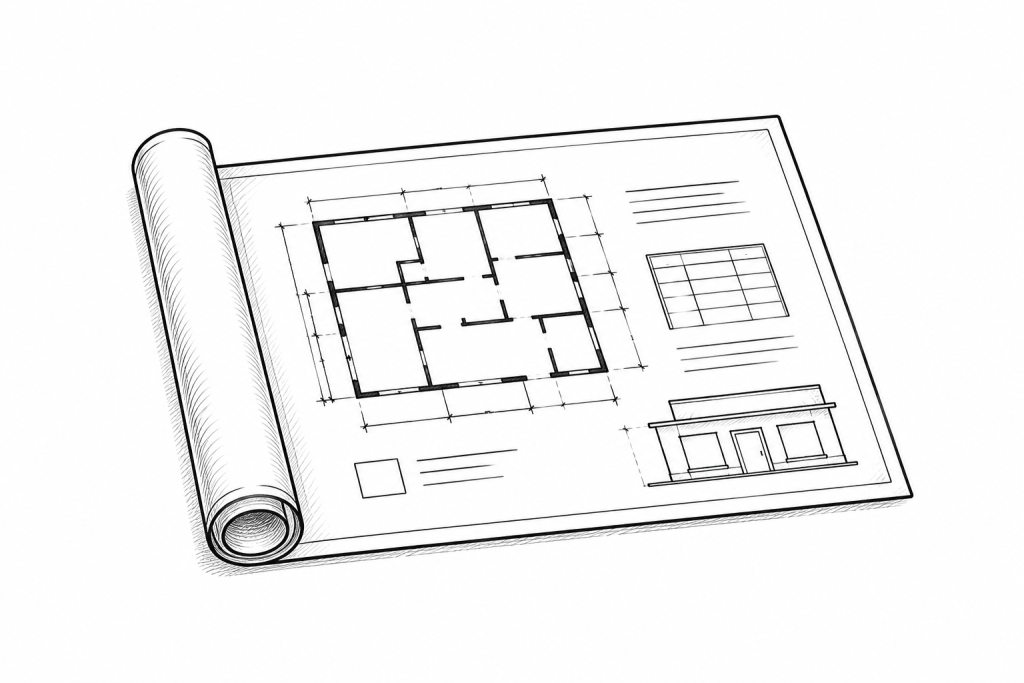
The Blueprint
At the beginning of the program, participants receive the foundational Blueprint template that will be used and refined throughout the process.
The Blueprint is the central working document of the program.
As participants move through the modules, they progressively complete, revise, refine, and integrate the various sections of the Blueprint into one coherent expansion strategy and structure document.
The Blueprint is not merely a workbook or collection of exercises.
It becomes the participant’s actual expansion framework.
Depending on the circumstances, the completed Blueprint may later function as:
- an implementation framework,
- a strategic planning document,
- a fundraising support document,
- a feasibility framework,
- a management communication tool,
- or the basis for future legal and operational documentation.

Expert Advice, Correction, and Accountability
The expert exists to:
- refine assumptions,
- evaluate alternatives,
- calibrate strategic decisions,
- identify weaknesses,
- explain implications,
- and adapt the generalized framework to the participant’s actual circumstances.
The expert process is intentionally interactive and iterative.
As later implications become clearer, earlier assumptions are often revisited and refined.
That is expected.
The purpose of coaching is not merely to reteach information already contained in the book.
Instead, the expert focuses on:
- judgment,
- structural coherence,
- sequencing,
- implementation,
- adaptation,
- and integration across the entire system.

The 10-Module Structure
The program follows the exact sequencing of the book and chapter structure.
Module 1, Chapters 1 through 3
Goals and Objectives, Situation Analysis, and Comparable Franchise Structures
Module 2, Chapters 4 and 5
Types of Franchises to Be Offered and Franchisee Financials
Module 3, Chapters 6 through 8
The Franchised Operation and Operations Manual, Facilities, Training, and Opening Support, and Purchasing Support
Module 4, Chapters 9 and 10
Ongoing Support Systems and Territory Structures
Module 5, Chapters 11 through 13
Term, Renewal, and Transfer, Franchisee Reporting and Insurance, and Defaults and Dispute Resolution
Module 6, Chapter 14
Franchise Fees and Other One-Time Fees
Module 7, Chapters 15 and 16
Royalties and Other Ongoing Payments, and Advertising and Marketing Contributions
Module 8, Chapters 17 and 18
Marketing and Selling Franchises, and Building the Franchisor Organization
Module 9, Chapter 19
Franchisor Economics
Module 10, Chapter 20
Running the Franchise Forward and Exit/Cash-Out Options

Included Resources and Implementation Tools
The program includes:
- the My Restaurant Franchise Strategy and Structure textbook,
- the Strategy and Structure Blueprint,
- implementation templates,
- comparable franchise analysis frameworks,
- franchisee pro forma templates,
- franchisor pro forma templates,
- development planning frameworks,
- and operational refinement tools.
These resources are not merely promotional bonuses.
They function as implementation and visualization tools designed to help participants understand how the various components of a franchise system interact as a coherent whole.
Prototype Refinement
Minor prototype refinement is often addressed naturally during the broader Strategy and Structure process.
Participants frequently identify:
- operational inconsistencies,
- communication gaps,
- training weaknesses,
- profitability concerns,
- management limitations,
- or scalability issues
while developing the Blueprint.
For this reason, selected operational refinement tools and frameworks are incorporated into the program.
Businesses requiring more substantial turnaround or refinement may later transition into a more focused refinement or restructuring engagement.
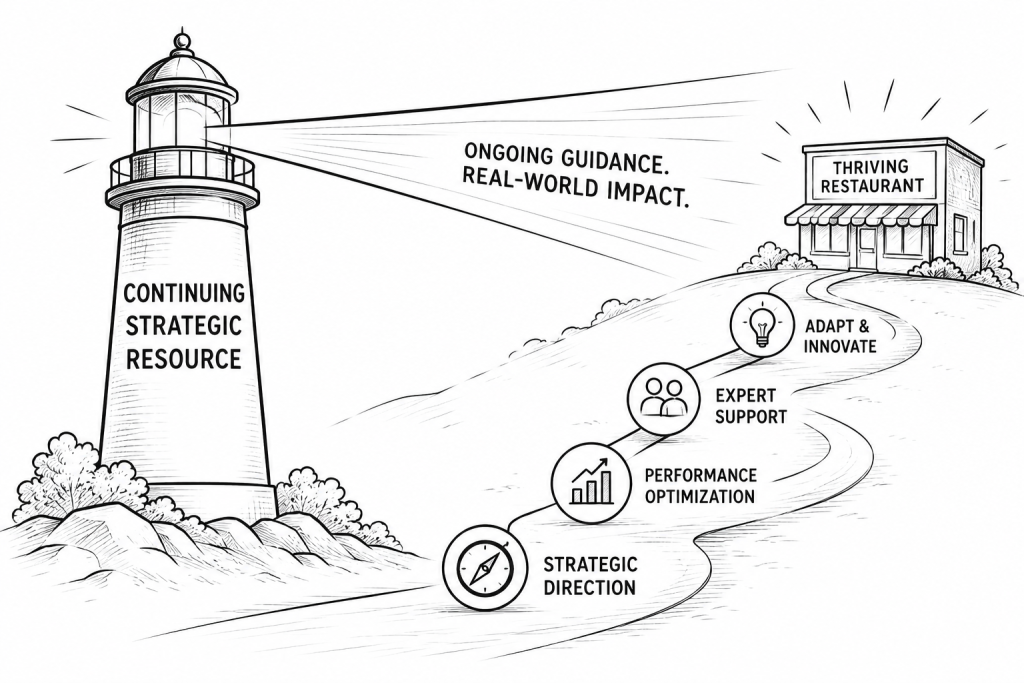
Continuing Strategic Resource
The Strategy and Structure process does not end when the initial Blueprint is completed.
As businesses grow:
- assumptions evolve,
- support burdens increase,
- leadership structures mature,
- territorial considerations shift,
- and new strategic questions emerge.
For this reason, Turngrow may serve as a strategic resource even after completion of this program.
This may include:
- recalibration,
- restructuring,
- governance review,
- support system refinement,
- capital-related planning,
- and long-term strategic guidance.
Intended Participants
The program is generally best suited for restaurant operators who:
- possess one or more promising prototypes,
- demonstrate operational seriousness,
- desire intentional long-term growth,
- and are willing to engage thoughtfully with the structural implications of expansion.
Perfection is not required.
What matters most is:
- openness to refinement,
- operational maturity,
- willingness to evaluate assumptions honestly,
- and commitment to building a coherent long-term expansion structure.
Final Objective
The objective of the My Restaurant Franchise Strategy and Structure Program is not merely to discuss expansion.
The objective is to help participants:
- create a first-class expansion strategy and structure,
- understand how to manage the expansion process intelligently,
- coordinate the professionals involved in implementation,
- and build a scalable long-term framework capable of supporting future growth.
At the completion of the program, participants should possess:
- a coherent and functional Strategy and Structure Blueprint,
- a deeper understanding of scalable expansion systems,
- and the ability to guide future implementation intelligently and intentionally.
The goal is not merely expansion.
The goal is intentional expansion supported by coherent structure.

Investment
The investment for the complete My Restaurant Franchise Strategy and Structure Program is $5,000.
This includes:
- the My Restaurant Franchise Strategy and Structure textbook,
- the complete 10-module study framework,
- the Strategy and Structure Blueprint framework,
- implementation templates and modeling tools,
- the 10 expert advisory and refinement sessions,
- and supporting implementation resources integrated throughout the process.

Next Step
The next step is a short conversation to see where you are now, what you are trying to build, and whether this program is the right fit.
This is not a generic sales call. It is a focused decision conversation about your restaurant, your growth options, and the structure needed before you move further.
If it appears to be a fit, we will discuss the Strategy and Structure program and the best way to begin.
Just a 20-minute conversation to make sure we are both ready to move forward.

Postscript For Early Participants
This delivery format is new, although the underlying methodology has been developed and refined through decades of franchise consulting, strategy development, consultant training, and operational refinement work.
For a limited number of initial participants, the complete program is currently being offered at one-half of the standard investment in exchange for:
- thoughtful participation,
- implementation feedback,
- and testimonials regarding the effectiveness of this delivery process and program structure.
This introductory arrangement will be discontinued once sufficient participant feedback and testimonials have been gathered.
The next step is simply a short conversation to determine whether this structure and process are appropriate for your restaurant and objectives. Please use the scheduling button in the previous section.
Financial Feasibility Model, The Textbook, Profit Fix, Brand Assessment, and Prototype Refinement Resources
Due Diligence
You are ready to proceed, but have a few more questions. Let us help.
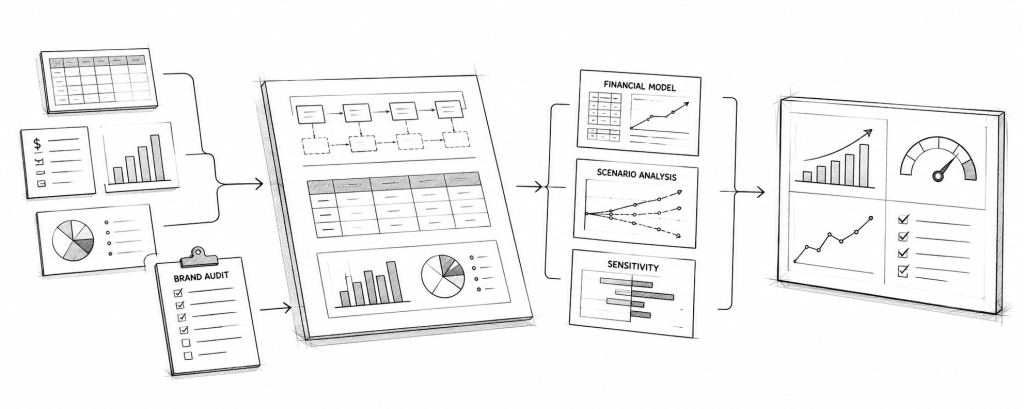
We have developed an easy-to-run financial feasibility model to approximate what your franchise could generate in terms of cash flow and return on investment for you. You provide us a few assumptions you should already have on hand, and we will use them to generate a first approximation of the results of your franchise program.
The textbook used to develop your franchise strategy and structure is available for download if you would like to study it before you commit to the full program.
You are also welcome to download our 24 Hour Profit Fix checklist, in case that is one of your concerns.
Similarly, if you need to know your brand is ready for franchising, you can use our Five-Day Brand Safety Check protocol.
If your main concern is the readiness of your prototype operation, however, we have a self-study course for that; but minor refinements are fully covered in our main strategy and structure program.

Financial Feasibility Model
In order to generate preliminary financial results for you and your standard franchised unit, we would need some assumptions. For most restaurant franchises all we need is:
- total investment to open a unit before franchising assuming no financing and a rented space.
- total sales per unit at maturity, cost of goods sold percentage, other variable expenses percentage, and total fixed expenses to operate before franchising.
- choose conservative, moderate, or aggressive franchise development.
You can send this to support@turngrow.com, and add explanations, as appropriate. Turnaround time is usually less than 48 hours. Include a phone number in case we need to reach you while we work on it.
Alternatively, you can book a time to discuss this and any other concerns with one of our franchise specialists. Use the button below.
What you can expect:
- a franchisee pro forma showing whether or not the economics support franchising, and what may need to change to make an attractive franchise offer.
- a franchisor pro forma showing total investment in franchise program development, anticipated cash flow and low water mark month, total cash out value after five years, and the internal rate of return.
- all accompanied by suggested next steps to take advantage of a good opportunity or to make the program more feasible.
We do not charge for this preliminary feasibility study, but we do offer extended customization of the model as an additional service for a fee. You can go here to read more about that.
The Textbook
The book serves as:
- the foundational reference framework,
- the conceptual architecture of the program,
- and the primary source of strategic and structural principles.
The book is intentionally comprehensive and is designed to remain a long-term strategic reference before, during, and after implementation of your franchise program.
You can download a copy here. It is only $49. Participants in the full program get a different link to download it for free.
The 24 Hour Profit Fix
Many restaurant owners attempt to solve profitability problems reactively rather than structurally. They focus on short term sales increases while underlying operational weaknesses remain unresolved.
Others attempt to expand before creating reliable financial controls, management systems, and operational consistency at the original location.
This is checklist you can download to review:
- excessive transaction adjustments.
- food waste and portion consistency.
- inventory visibility.
- labor efficiency.
- long term operational visibility and accountability.
This guide is intended as a starting point, something simple that can be used to focus on stopping profit leaks for 24 hours, not a complete operational transformation. Lasting improvement typically requires structure, implementation, accountability, and strategic refinement.
Just fill in the form below, and the download link will be sent to the email you provided immediately. If you don’t see it, check your spam folder, and if you find it there, move it to your inbox. If you still don’t find it, contact support@turngrow.com, and we’ll make sure you get it.

Five Day Brand Safety Check
This guide is intended as a practical overview and evaluation checklist designed to help restaurant owners identify structural, operational, and brand-related issues that may affect scalability, multi-unit growth, or franchising readiness.
It is not intended as a complete treatment of franchising, restaurant management, or expansion strategy. Rather, it is designed to help you begin evaluating whether your current operation can function consistently, profitably, and independently of constant owner involvement.
What to do one day at a time:
- evaluate brand communication
- test operational independence
- audit quality consistency
- examine profitability visibility
- review competitive differentiation
This process often provides greater clarity regarding operational maturity, management readiness, organizational structure, and long-term scalability.
For some operators, it confirms readiness for expansion. For others, it reveals the need for further refinement before pursuing growth.
Just fill in the form below, and the download link will be sent to the email you provided immediately. If you don’t see it, check your spam folder, and if you find it there, move it to your inbox. If you still don’t find it, contact support@turngrow.com, and we’ll make sure you get it.
Prototype Refinement Resourses
It is difficult to generalize a solution when you are uncertain about operational readiness to franchise at the unit level. The good news is you will never have the final solution: you will always improve, and franchisees are often a good source of useful suggestions.
Nevertheless, we approach this subject in several ways:
- refinement often happens naturally as part of the strategy and structure process, as you make decisions with respect to training and supporting franchisees; you can emulate much of that process by following what is set forth in the textbook (see link to purchase book above)
- as part of the strategy and structure process, we give participants an annotated restaurant operations manual outline, which is also available for purchase separately for $49 (click link to order)
- restaurant operations refinement can also be accomplished by taking and implementing our My Restaurant Showcase course, which is designed to turnaround a failing or stagnant restaurant operation in ten weeks (see below)
If that is insufficient in your situation, our experienced restaurant operators are available for one-on-one unit refinement advise, which may be explored by booking a conversation.
The purpose of this advisory is not merely to reteach information already contained in the course.
Instead, it focuses on:
- judgment
- sequencing
- implementation
- adaptation
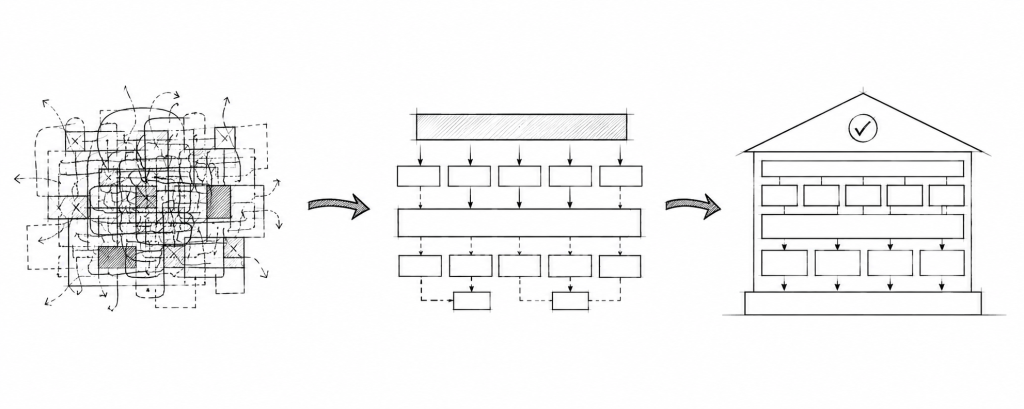
Restructuring and Strategic Recovery
Successful franchise and franchise-like organizations can outgrow the strategy and structure that made them successful in the first place. Increasing conflict, slowing growth, rising headquarters costs, changing relationships with franchisees or operators, uncertainty about future direction, or questions about the business model itself are often symptoms of deeper structural issues. Business restructuring helps determine whether the enterprise is still organized to achieve the owner’s objectives. Prototype turnaround may sometimes be part of the process, but it is not the reason restructuring is undertaken.
→ Explore Restaurant Business Restructuring and Strategic Recovery
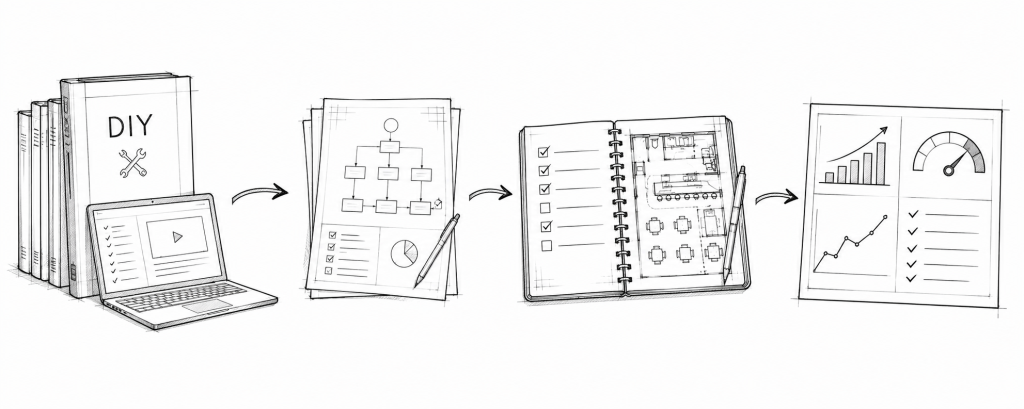
The Textbook, Individual Modules, And Self-Directed Resources
Not everyone wants the complete program. You may already know where you’re headed and simply prefer a financial model, an assessment, a template, an implementation module, or guidance on a specific issue. Our self directed resources let you focus on the parts most relevant to your situation while giving you the flexibility to work at your own pace.
→ Explore Books, Modules, Templates, and Self Directed Resources